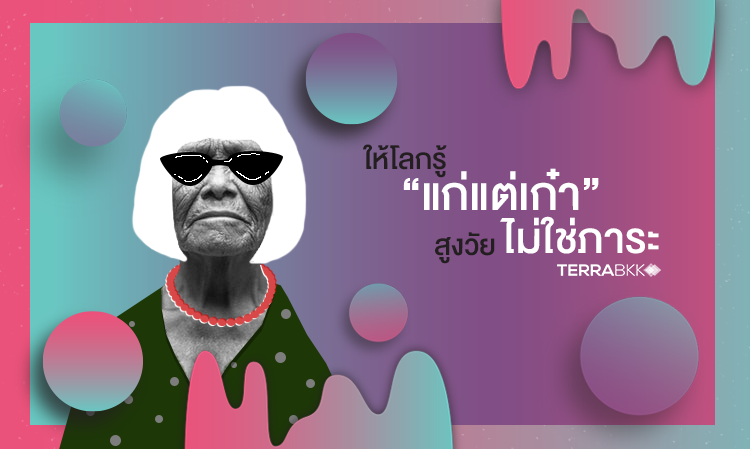
Let the World Know: 'Aged but Stylish' - Aging is Not a Burden
Let the World Know: 'Aged but Stylish' - Aging is Not a Burden
Who says that getting older means being sidelined? While that may have been a belief 20 years ago, today, as Thailand fully embraces an aging society, many businesses are beginning to adjust their strategies to tap into the senior market, which is becoming a dominant force. It’s time to rethink our perspectives because the changing demographics not only affect consumer market trends but also the diversity within organizations, as older adults are becoming a significant part of the workforce.
The problem is that many individuals entering this new milestone of life find themselves categorized as seniors and start to doubt their potential compared to their younger selves when they first entered the workforce. This can lead to a decline in work performance. Therefore, to revolutionize your older self and prevent fading with age, consider these five points, and you’ll discover what it means to be 'aged but stylish.'
1. Age is an Asset Be proud of the increasing number of your age and demonstrate to the world that growing older does not strip away your vibrancy but rather enhances your skills to tackle new challenges in the business world. In simple terms, leverage the knowledge and work experience that cannot be found in books or universities and cannot be inherited. Discard negative notions that technology is a hindrance for older generations, and instead, open your mind to learning new marketing tools to keep up with millennials and Gen Z.
2. Tell Yourself You Have Superior Communication Skills One advantage of older individuals who grew up before the rise of text messaging and social media is their deep understanding of the value and benefits of face-to-face communication. This traditional form of communication is timeless and always essential in the business world. Therefore, use this skill as a competitive edge in your work.
3. Focus on What You Do Having seen much of the world and gained extensive life and work experience, older adults often discover what they truly want. They stop searching for what they think might be right for them and focus entirely on the work they are currently engaged in. According to a survey by the Pew Research Center, 54% of employees over 65 continue working because they want to, not for the money. Furthermore, 54% of this age group expressed satisfaction with their jobs, compared to only 29% satisfaction among employees aged 16-64.
4. Utilize Your Strong Professional Connections With years of experience, older employees have likely met many colleagues in their industry. When comparing experience with recent graduates, the gap is significant. Therefore, do not overlook the value of relationships built over time and choose to leverage them for your benefit. A study from the Center on Aging and Work at Boston University found that 43% of employers acknowledged that older employees have more professional connections than younger generations, where only 30% of younger employees were recognized for their connections.
5. Sell Your Achievements, Not Your Years of Experience Regardless of the era, what organizations seek is results. Even if you are a Gen X employee who is the youngest in your department, don’t focus on that. Use your achievements as your talking point. Instead of relying on your 20 years of experience as an advantage, showcase your successes and the experiences that define you within the company.